

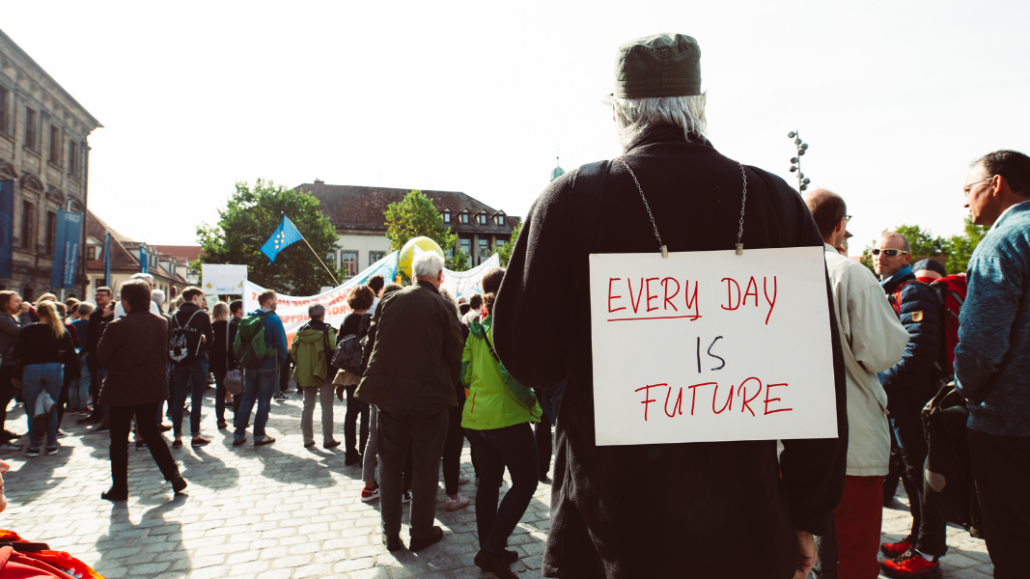
Are you experiencing increased psycho-emotional distress in the current political climate? You are not alone. Many people, especially in New York City, are struggling emotionally in the face of social and political developments. For example, the ongoing war in the Middle East, aggressive treatment of immigrants, and the increase in anti-LGBTQIA+ policies. Political stress is a real and recognized source of contemporary mental health issues like political depression.
How can you cope with political stress when every day brings news and experiences of political stress? Whether you are part of a directly impacted community, an ally, or just trying to live through these times, there are several strategies for protecting your mental health and building resilience when politics and mental health are at odds.
Tip 1: Use Your Community
Those of us who are migrants, transgender, or people of color, may live in a continual state of fear. Our cortisol levels remain elevated. This negatively affects our physical and mental health. Ongoing stress can both raise anxiety and contribute to depressive moods. We may be choosing to stay home or changing our social habits for fear of conflict or immigration enforcement, which furthers isolation, which can likewise increase anxiety and depressive moods.
One of the best ways to protect your mental health is to seek out a safe, trusted community. Check out resources in your own neighborhood for an online chat group with people undergoing similar experiences using the app Signal (WhatsApp is more popular in immigrant communities). Look for local mutual aid groups and community organizing groups made of allies who are involved in efforts to protect and advocate for impacted people. You can look for groups of allies via the national movement Indivisible. In NYC, many of the leading groups of allies are connected with faith traditions. To find a faith community with allies near you, you can contact [email protected].
Countering isolation with a safe community is the most important strategy for protecting your mental health in times of political stress if you identify as part of an impacted community. The same applies to allies. If you are experiencing political stress and increased isolation, find connection in communities of like-minded allies.
Tip 2: Families of Choice
Do you find yourself at odds with family members over politics? Do you have a different set of social values than others in your family? If so, you may currently be finding it challenging to sustain a close, mutual relationship with some family members.
Politics in America has divided families and ruptured the close attachments we formed with elders in our childhood. And this rupture can leave a mark on our mental well-being. Like with a death, a rupture in a family relationship can arouse deep feelings of grief and anger. You may find it healing to work with a therapist to process these losses and find ways to form new, meaningful attachments that can provide you with the relational connections you need to thrive.
Read more about politics in therapy here.
One strategy for forming new attachments to supplement our old family ties that are no longer as close is to form “families of choice.” Families of choice are intentional, chosen networks of support that people often form around particular affinities. This could be around sexual identity, shared interests, sobriety, location, or simply a shared commitment to communal, often intergenerational mutual care and support. You can start your own “chosen family” or look for meet-ups, affinity groups, and community centers, such as a local Pride Center, that already exist in your area.

Tip 3: Control Information Input
Doomscrolling news sources, especially video- and image-based content, can increase political stress and negatively affect your mental health. Protect your well-being by controlling the frequency and manner in which you receive information so you are not overwhelmed and have time to emotionally and mentally process information. Set time limits for how often and how long you watch the news, whether that’s on TV or on image-rich social media platforms like Instagram and TikTok. If you are finding it hard to limit your news engagement, consider committing to substituting a different, interactive activity in place of news watching, like calling a friend while going for a walk once a day for a week. Or meeting someone for coffee and conversation every morning for a week. Then evaluate if you want to continue the news holiday for longer.
You may also consider switching the format of the information you are getting. Instead of getting news from visual sources that bombard your eyes and brain with complex signals, consider switching to text-based sources that your brain decodes more slowly and are thus less overwhelming than images. Consider getting your news through written articles, text-based social media, or even podcasts rather than video.
For more tips on how to limit news input, check out this recent article on news input and political stress.
Tip 4: Claim Your Agency
One of the factors that contributes to political stress and mental health decline in challenging political times is the sense of being powerless in the face of large-scale policies that you don’t have control over. Whether that’s the unsanctioned bombing of civilians and civilian infrastructure abroad or increased immigration enforcement here at home, it feels like all the power lies with distant government decision-makers. In the face of such perceived power differentials, we can easily become despondent and paralyzed.
You can protect your mental health by claiming the agency you do have. Despite political challenges, we actually often have more agency than we think. You alone may not be able to stop a war or stop all of your undocumented relatives or neighbors from being deported. But there are actions that you can take toward those ends, and they can be local and time-limited. Volunteer for a candidate for elected office that you agree with by doing even just one phone shift or door-to-door canvassing shift. Find a local organization that works on the issues you want to change.
Make a donation or offer to volunteer for a specific effort. Attend a training in your neighborhood, in your borough, or online to learn and build your capacity to take action in case of emergency or when needed. In NYC, opportunities abound for one-time and ongoing action to create the change you want to see. Claim your power and agency while protecting your mental health.
Tip 5: Take a Self-Compassion Break
Maybe you have already been helping people you love or strangers who are targets in the current political climate. Maybe you have claimed your agency and done all that you can do and now you are exhausted. Empathy fatigue is the experience of being emotionally depleted and unable to sustain feelings of empathy or compassion for others. It usually happens when we have experienced sustained and intense exposure to the stress and trauma of others without having time to process and protect our own well-being.
If you find yourself experiencing empathy fatigue, it’s time for you to focus on caring for yourself before others. It is especially important to be mindful of your own needs for self-care and renewal if you are part of an impacted community, trying to help the people with whom you identify and love.
In these moments, it’s time to direct compassion toward yourself and take some self-compassion breaks. An earlier MyTherapyNYC blog lays out how self-compassion can help protect mental health in the face of racism.
Read more about racism and mental health.
Protect Your Mental Health to Build Lasting Resilience
To protect our mental health, to endure, and to create the future change we believe in, we need to practice kindness toward ourselves. What that looks like is different for each person. It might include practices such as mindful meditation, regular exercise, bodywork, and regular therapy. It might involve participating in spiritual disciplines and communities. It might mean stepping away from activism for a time until you have regained your resilience. One tool for practicing mindfulness as self-compassion is the free app I-Chill, available in multiple languages in your phone’s app store. I-Chill offers a series of wellness exercises for managing stress and trauma.
Political systems do not change quickly; political stress can continue for many years. Consequently, learning and implementing strategies for protecting your mental health amidst political challenges is essential to keep you resilient and healthy for the long haul. The steps you take now to protect your mental health in politically challenging times will help keep you healthy for the future.
Do you want to explore political stress in therapy? Reach out to myTherapyNYC to find out which of our therapists would be a good fit for you!
How are the current challenging political times impacting your mental health? Join the conversation in the comments below!

- 5 Tips for Coping With Political Stress - July 9, 2026
1 comment
This is such a thorough and actionable list of ways to cope with political stress. Thank you so much for putting this together! I especially appreciate you highlighting support systems like Indivisible and personal practice support through I-Chill. These will absolutely assist me in navigating my own experience of political stress.